Grid Soccer Reasoning Challenge

Reviews
Grid Soccer Reasoning Challenge takes a single mechanic, the swipe-to-roll ball, and builds a full puzzle game around it. Walls and barriers become tools rather than obstacles, and later grids require planning several moves ahead. The bright, minimal presentation keeps focus on reasoning, while the gradual difficulty curve avoids frustration. It suits players who enjoy deduction and spatial puzzles more than action. The main limitation is that the available information does not specify level count or extra modes.
Description
The Core Puzzle Mechanic
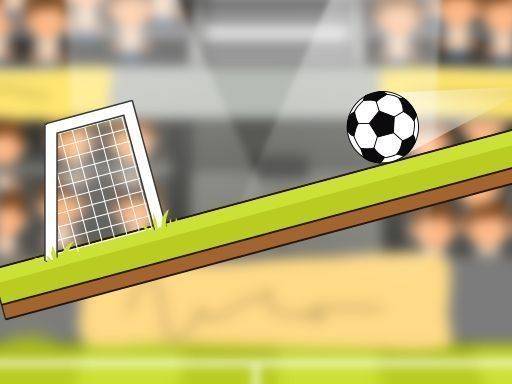
Every level in Grid Soccer Reasoning Challenge is built around one rule: swipe once and the ball rolls in that direction until something stops it. Walls and barriers block movement, so the ball's final position depends entirely on where those obstacles sit. The puzzle is not about aiming directly at the goal. It is about reading the grid, predicting the ball's path, and choosing a swipe that uses the walls to redirect the ball toward the goal. Because the ball cannot stop mid-roll, each swipe is a commitment. That single constraint is what turns a simple action into a reasoning problem.
How Difficulty Builds
Early grids keep the layout open with few obstacles, so the intended path is easy to see. As levels progress, barriers become more numerous and arranged in ways that require planning several swipes ahead. A move that looks helpful on its own might leave the ball stuck against a wall or far from the goal. The difficulty curve is gradual: new arrangements appear without sudden spikes, and each puzzle tends to introduce a slightly different configuration rather than repeating the same pattern. That variety keeps the reasoning fresh instead of turning the game into a memory test.
Presentation and Pace
Bright colors and clean graphics keep attention on the grid. The interface is minimal, and animations are smooth but unobtrusive, which supports a relaxed pace. There is no timer pressure described, so players can study a layout before swiping. This makes the game suitable for short breaks as well as longer sessions, since a single puzzle can be finished quickly but a chain of them invites continued play.
Reasoning Skills in Practice
Solving these grids exercises logical thinking and spatial awareness. Players learn to visualize a sequence of moves before acting, because the ball's path is determined by obstacles rather than direct control. The game rewards patience and strategic planning, offering a gentle mental workout. It is a good fit for players who enjoy deduction puzzles, grid-based navigation, and soccer-themed goals without needing reflexes or fast reactions.




Editorial Notes