Stickman Helper Draw Puzzle
Reviews
Stickman Helper Draw Puzzle stands out for turning a basic drawing action into a flexible problem-solving mechanic. The game's strength lies in its instant retry and open-ended solutions, which encourage experimentation rather than frustration. It suits players who enjoy logic puzzles and creative thinking, though those seeking fast-paced action or complex narratives may find it too simple. The lack of specified level count or offline mode leaves some practical questions unanswered.
Description
Core Drawing Mechanic
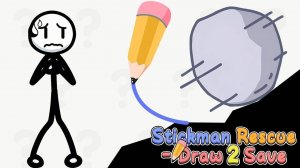
In Stickman Helper Draw Puzzle, your primary tool is a line you draw directly on the screen. Tap and drag to sketch a shape; it instantly becomes a physical object in the game world. That object can serve as a shield against a rolling boulder, a bridge across a gap, or a ramp that changes the stickman's direction. The game asks you to assess each level's layout and decide what to draw and where. Because drawn objects interact with the environment, the same simple line can solve a problem in multiple ways. [IMG_1]
Level Structure and Challenge
Every level presents a new scenario with a specific danger and a clear goal: get the stickman to safety. Hazards vary—some levels feature falling objects, others have pits or moving obstacles. You must study the stickman's starting position, the location of the threat, and the path to the exit before drawing. A single well-placed line often suffices, but the solution isn't always obvious. The game encourages you to try different approaches; if your first attempt fails, an instant retry lets you adjust immediately without penalty. This loop of observe, draw, and test forms the core of the experience. [IMG_2]
Controls and Accessibility
The controls are limited to tapping, dragging, and a play button. There are no complex gestures or timing-based inputs. After drawing, you tap play to watch the action unfold. If the stickman reaches safety, the level ends successfully. If not, you can redraw and try again. This simplicity makes the game approachable for players of all ages, including those who don't typically play puzzle games. The lack of violent content and the friendly stickman character keep the tone light and positive.
Tips for Effective Play
Before drawing, identify the exact danger the stickman faces. A rolling boulder might require a sloped barrier, while a gap calls for a flat bridge. Drawn objects can serve multiple purposes—blocking, bridging, or redirecting—so consider how one line might accomplish two tasks. If your first idea fails, the instant retry makes it easy to test a different shape or angle. Regular play improves your ability to quickly assess spatial relationships and predict how drawn objects will behave. The game is designed to provide a mental workout without frustration.






Editorial Notes