Hair Styling Salon Puzzle
Reviews
Hair Styling Salon Puzzle delivers exactly what its name suggests: a gentle salon experience where children style a princess's hair. The step-by-step process—wash, dry, curl, straighten, lengthen, dye—is easy to follow, and the absence of time limits or fail states keeps the mood relaxed. It suits young players who enjoy dress-up and creative play, though older children may find the scope limited. The game's strength is its pressure-free design; its limitation is that it offers no challenge or progression beyond styling variations.
Description
A Salon Built for Young Stylists
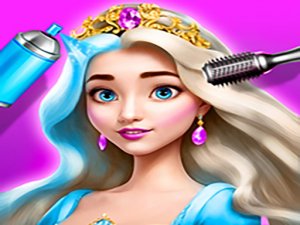
Hair Styling Salon Puzzle is a dress-up and styling game aimed at children. Players act as a stylist for a princess, using a set of gentle tools to change her hair. The game avoids violence, weapons, and frightening imagery, focusing instead on creativity and kindness. There are no opponents, scores, or fail states.
Step-by-Step Styling Process
Each session begins by choosing a princess. From there, the routine follows a logical order: shampoo and water clean the hair, a blow dryer removes moisture, and then styling tools come into play. A curling iron wraps sections of hair for curls, while straightening clips smooth out waves. If the hair looks too short, a hair growth agent adds length. Finally, players pick a dye color from a palette and apply it. Steps can be repeated or mixed in any order, so no two styles need to look alike.
Controls and Pacing
Everything runs on tap and drag inputs with clear on-screen instructions. There are no time limits, countdowns, or pressure to finish quickly. This makes the game accessible to young players who are still developing fine motor skills. The lack of timers also means children can pause, rethink, and experiment without penalty.
Encouraging Experimentation
Because there are no wrong moves, the game rewards curiosity. Trying a curl after straightening, or adding dye before a final trim, produces different results. The hair growth agent is particularly useful for players who want to test longer styles before coloring. Repeating steps is allowed and often leads to more polished looks.








Editorial Notes