Classic Car Sliding Puzzle
Reviews
Classic Car Sliding Puzzle delivers exactly what its name suggests: a straightforward sliding tile mechanic applied to three vintage automobile photographs. The three difficulty modes adjust tile count and complexity, giving beginners a comfortable entry point while offering experienced solvers a stiffer challenge. Time and move tracking add a light progression layer without introducing pressure. The absence of ads and time limits makes it well suited to short breaks or longer unwinding sessions. Its main limitation is scope—three images may feel modest for players seeking extensive variety.
Description
Restoring Vintage Cars One Tile at a Time
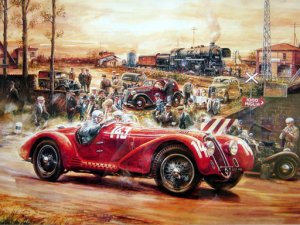
Classic Car Sliding Puzzle turns three vintage automobile photographs into sliding tile challenges. You choose one of three classic car images—such as elegant roadsters and refined sedans—then select a difficulty mode that determines how many tiles appear on the board. The image is scrambled into a grid with one empty space, and your goal is to slide the tiles back into their correct order to recreate the original picture.
How the Sliding Mechanic Works
Each move involves clicking or tapping a tile that sits adjacent to the empty space. That tile slides into the gap, creating a new empty space elsewhere on the board. The puzzle records your time and move count, so you can see whether your solving efficiency improves over repeated attempts. There is no time limit, which means you can plan each slide without pressure. The game is designed to be a relaxing experience, with no ads or distractions interrupting play.
Three Difficulty Modes for Different Skill Levels
The three difficulty modes adjust the number of tiles and the overall complexity of the puzzle. Beginners can start with a mode that uses fewer tiles, while experienced puzzle enthusiasts can choose a mode that demands more moves and sharper spatial reasoning. Because the same three car images are available across all modes, you can revisit a familiar picture at a higher difficulty and focus purely on the mechanics rather than learning a new image.
Approaches That Make Solving Easier
A common strategy is to complete the edges first, creating a frame that simplifies the remaining sections. Distinctive colors, shapes, or patterns in the car photograph can guide where each tile belongs. If you feel stuck, solving one small section at a time is more effective than trying to fix the entire board at once. Regular practice helps reduce both your time and your move count.








Editorial Notes