Redavni Arcade Puzzle Quest
Reviews
Redavni Arcade Puzzle Quest leans into oddity rather than polish. Its core loop of pressing buttons to summon skulls, trigger curses, and react to colored skeletons and UFOs gives it a distinct identity, and the Cat Chan fight plus Potion Peony health management add a light risk-reward layer. The simple desktop controls make it approachable, though the lack of explained patterns means progress depends on observation. Best for players who enjoy quirky, unpredictable arcade puzzles over structured campaigns.
Description
Pressing Buttons, Summoning Chaos
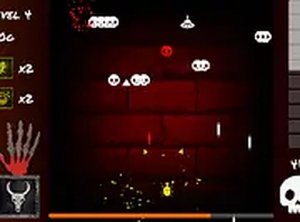
Redavni Arcade Puzzle Quest is a free online puzzle game built around a simple but unusual control scheme: you press on-screen buttons to interact with whatever appears. One button in the bottom right summons a skull. A curse button on the left brings out various elements. Different colored skeletons and UFOs show up as you play, and you respond by pressing the appropriate buttons. The game does not ask you to move a character through a level; instead, you manage the screen's shifting contents with timed presses.
Cat Chan and Potion Peony
Two named elements shape the risk-and-reward loop. Pressing the cat button makes Cat Chan appear as an opponent. Defeating Cat Chan is described as a rewarding challenge, so it functions as a goal to work toward rather than a random event. Potion Peony is a helpful item that restores your health gauge to its maximum. Because health is a limited resource, deciding when to use Potion Peony matters, especially before you trigger a Cat Chan encounter.
Reading the Screen
Colored skeletons and UFOs add variety and unpredictability. The game's description notes that these elements appear and can be interacted with, but it does not spell out fixed attack patterns. That means much of the puzzle lies in watching what shows up and learning which button response fits each situation. UFOs are framed as unexpected surprises, while the different skeleton colors suggest that not every skeleton calls for the same reaction. Regular play is the main way to build that recognition.
Who This Is For
This is a desktop-oriented game controlled with a mouse or keyboard, and its simple button controls make it easy to start. It suits players who enjoy odd, unpredictable arcade puzzles more than those looking for a story-driven or realistic experience. The lack of complex setup means you can begin pressing buttons almost immediately, but the Cat Chan fight and health management give you something concrete to improve at over time.








Editorial Notes