Africa Maze Puzzle Explorer
Reviews
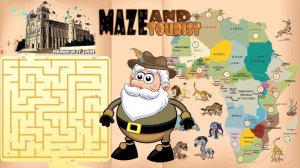
Africa Maze Puzzle Explorer combines simple maze navigation with factual geography lessons. Each country level presents flags, capitals, and languages at informational stations, then ends at a landmark. The lack of timers or penalties makes it accessible for children and casual players. Its main limitation is that it prioritizes education over challenge, so players seeking difficult puzzles may find it too easy. It works best as a relaxed learning tool for families or classrooms.
Description
Country Mazes and Cultural Stations
Each maze in Africa Maze Puzzle Explorer represents a specific African country, with a layout that reflects that nation's geography or cultural theme. As players navigate, they pass stations that present the country's flag, coat of arms, capital city, and official language. These stations are not optional collectibles; they are integrated into the route, so players encounter them naturally while finding the correct path. The maze ends at an illustrated tourist attraction, giving each level a clear destination and a visual reward.
Pacing and Player Control
There are no time limits or penalties for wrong turns. Players can stop at any station, study the information, and then continue without pressure. This design supports two audiences: casual players who want a relaxed puzzle experience, and learners who need time to absorb facts. The absence of failure states means the game never punishes exploration, which is unusual for maze games that often rely on timer-based tension.
Progression and Unlock System
Completing a maze unlocks the next country, creating a linear progression through multiple African nations. This structure gives players a sense of advancement while ensuring they encounter one country at a time. Because each level is self-contained, players can replay earlier mazes to review facts without affecting their overall progress. The unlock system also provides a natural stopping point after each country, which suits short play sessions.
Visual and Educational Design
Colorful mazes and illustrated landmarks are the primary visual elements. The game uses clear visual cues to guide navigation, and the informational stations are presented as part of the environment rather than as separate pop-ups. This keeps the learning embedded in the act of playing. The overall presentation is designed to be accessible for all ages, with straightforward controls and no complex mechanics that would distract from the geography content.






Editorial Notes