Turn Turn: Car Traffic Puzzle Game
Reviews
Turn Turn strips driving down to a single decision: when to turn. That restraint works in its favor, because every level asks you to read traffic flow and act at the right moment. The drag controls are simple, and the family-friendly presentation keeps the focus on the puzzle. Difficulty rises through varied road settings, though the core loop stays consistent. Best for players who enjoy calm, observation-based challenges rather than fast action.
Description
Reading Traffic Flow
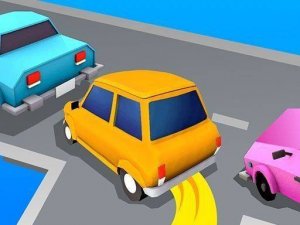
In Turn Turn, your car sits at a turn while other vehicles move along their own paths. Each car has a distinct speed and direction, and your task is to judge when a safe gap appears. The core challenge is not steering but observation: you must track multiple moving objects at once and predict where they will be a moment from now. A single well-timed turn clears the level; a collision sends you back to try again.
Controls and Interaction
Steering uses a simple drag mechanic with a mouse or touchscreen. You click and drag to guide your car through the required turn. The controls are designed to be responsive, so precise movements are possible when a narrow window opens. There is no acceleration or braking to manage—the entire decision rests on when to move, not how fast.
Level Variety and Difficulty
Levels gradually increase in difficulty, introducing different road environments such as city intersections and winding country lanes. Early stages may have sparse traffic, while later ones demand sharper timing as more vehicles cross your path. The clean visual design keeps attention on the puzzle rather than distracting details, and the family-friendly content means no inappropriate themes appear.
Approach and Patience
Success comes from watching a level before acting. Note the speed and spacing of each vehicle, then wait for a gap rather than rushing. If you fail, the level restarts, giving you another chance to study the pattern. Consistent practice improves your ability to judge gaps and time the turn, turning a simple premise into a test of calm decision-making.








Editorial Notes