Concentration Path Puzzle
Reviews
Concentration Path Puzzle strips its challenge down to timing and observation. Obstacles move on fixed cycles, so progress comes from reading those cycles and releasing your input at the right moment. The instant reset on contact can feel harsh, but because layouts never change, every failure teaches something useful. The clean visuals and simple tap-or-click control make it easy to pick up, though players who prefer fast, forgiving action may find the pace slow. It best suits those who enjoy methodical puzzle solving and repeated attempts.
Description
Reading Moving Obstacles
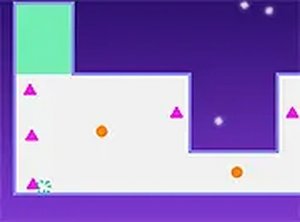
Every level in Concentration Path Puzzle places a new arrangement of hazards between your starting point and the finish area. Floating triangles travel back and forth on a steady path, swinging squares rotate around a fixed pivot like a pendulum, and spinning circles turn in place to open and close gaps at regular intervals. None of these movements are random. Each obstacle follows a predictable cycle, so the real task is watching long enough to identify when a safe opening appears and then moving through it without contact.
One-Touch Controls, One-Hit Failure
You tap or click to move the character forward, and it stops automatically the moment you release. That single input works the same on touchscreens and computer mice, and the game runs directly in a web browser with no installation. A full screen mode is available on desktop for a less cluttered view. The catch is that any collision resets the level and returns you to the start, so every movement carries weight.
Learning Through Repetition
Because the layout stays identical after a failed attempt, each restart becomes a chance to refine your route rather than relearn the level. Over repeated tries you build a mental map of safe paths and timing windows, which is why the game rewards patience and careful study more than fast reflexes. Later levels introduce denser obstacle arrangements that demand closer attention to detail, but the underlying rule never changes: observe first, move second.
Clean Visual Feedback
A minimal visual style keeps the focus on obstacle movement. Shapes are clearly outlined against a plain background, making their paths easy to track, and the character responds immediately to input. When you make a mistake, a flash or reset animation shows exactly where contact occurred, helping you adjust your approach on the next attempt instead of guessing what went wrong.




Editorial Notes