Locked Room Logic Quest
Reviews
Locked Room Logic Quest is a point-and-click puzzle game built around a single confined room and the clues hidden within it. Its strengths are a fair difficulty curve, no time pressure, and environmental storytelling that makes objects feel purposeful. It suits players who enjoy methodical reasoning and close observation. The main limitation is scope: the experience is contained to one room, so those seeking large-scale exploration may find it narrow.
Description
Puzzle Solving in a Sealed Room
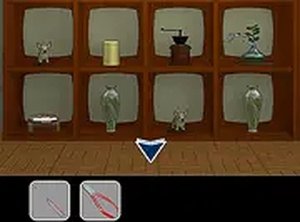
Locked Room Logic Quest drops you into a confined space where progress depends on noticing what others overlook. You interact by clicking objects to pick them up, examine them, or combine them with other items. A key might sit behind a painting; a code could hide in the pattern of books on a shelf. No timers force your hand, so you can reason through each step at your own pace.
Clues Hidden in the Environment
The room itself carries the story. A cluttered desk suggests a hurried exit; a locked drawer hints at something worth protecting. These details are not decoration—they are the puzzle. Every object and its placement can matter, and the calm, intriguing atmosphere rewards patient exploration rather than frantic clicking.
Gradual Progression and Fair Logic
Solving one puzzle opens new areas and clues. Later challenges demand more complex item combinations and sharper observation, but the game never cheats: every solution is logically deducible from what you have already seen. If you stall, returning to earlier areas often reveals a detail you missed. There is no penalty for stepping away and coming back with fresh eyes.
Interface and Visual Clarity
The interface stays clean, with clear cues marking interactive objects. It plays best on a desktop computer with a mouse, and full-screen mode removes distractions. The graphics are simple but purposeful—important items stand out without being handed to you. Touchscreen play may also be possible, though the mouse remains the most precise option.
Approaching Puzzles Systematically
Combine items in different ways and watch for patterns or sequences. If a puzzle seems impossible, consider what information you have overlooked. Some solutions use an item in a non-obvious way—a mirror to redirect light, a string to reach a distant object. Patience and a methodical approach are more useful than guesswork.






Editorial Notes