Cookie Splitter Challenge
Reviews
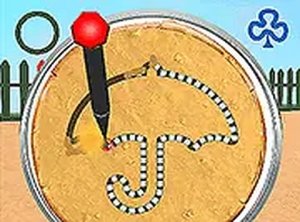
Cookie Splitter Challenge is a browser-based puzzle game built around a single satisfying action: drawing a straight line to break a cookie cleanly. Its strength lies in the feedback loop, where each attempt is scored and compared against other players. The variety of cookie shapes, from round to star-shaped to irregular, prevents the mechanic from becoming stale. It suits players who enjoy precision tasks and short sessions, though anyone seeking deep progression or multiplayer competition may find the scope limited.
Description
One Line, One Clean Break
The entire game rests on a single action: draw a straight line across a cookie to split it. A clean break depends on where you place that line, so each attempt starts with a quick visual assessment of the cookie's outline. After you release, the game shows how accurate your split was, turning every try into a small feedback loop. That immediate scoring is what keeps the game moving: you plan, you draw, you see the result, and you adjust.
Why Shape Variety Changes Your Approach
Cookies appear in different outlines, including round, star-shaped, and irregular forms. The shape dictates where a straight line can realistically produce an even break. A circular cookie gives you more margin for error, while a star or an uneven edge forces you to think about angles and symmetry before you commit. Because the shapes change, you cannot rely on one fixed technique; you have to read each cookie and adapt.
Controls That Work on Any Screen
On a desktop, you click and drag with the mouse to draw the line. On a phone or tablet, you tap and drag with your finger. There are no menus to learn and nothing to install, since the game runs in a web browser. That makes it easy to play for a few minutes during a break or to keep going through a longer session at home.
Score Comparison and Replay Appeal
Cookie Splitter Challenge lets you compare your accuracy scores with other players. This adds a light competitive layer without requiring live matches. Seeing where your best splits rank gives you a reason to try again, and the mix of shapes means each new attempt asks for a slightly different decision. The result is a game that rewards repeated practice rather than one lucky draw.





Editorial Notes