Corridor Hideout Challenge

Developer: Sign Ember Games
Updated: 2026-10-01
Reviews
Corridor Hideout Challenge works best as a social game for families or casual groups. The two-role system and movable barriers create genuine tactical choices, while the pastel visuals and simple controls keep it accessible to younger players. Matches finish in under five minutes, which suits short gatherings. The main limitation is that the available description does not detail player counts, progression systems, or platform availability, so those specifics remain unclear.
Description
Role Selection and Round Flow
Each round of Corridor Hideout Challenge begins with players choosing to be a hider or a seeker. Hiders move through the maze and can slide colored barriers to conceal themselves or block pathways. Seekers patrol the corridors, watching for movement or barriers that seem out of place. A round ends when the seeker tags every hider or when the timer runs out. Points go to hiders who stay hidden and to seekers who make tags, with extra bonuses from gems scattered around the maze.Barrier Tactics and Seeker Awareness
Playing as a hider depends on spatial awareness and quick decisions. Barriers can be repositioned during play, letting hiders create temporary alcoves or redirect a seeker's route. Experienced hiders learn to predict the seeker's path and use barriers to break line of sight. Seekers must balance speed with careful observation; rushing through corridors can cause them to miss subtle clues, like a barrier that sits slightly off its usual spot. Because players switch roles between rounds, each match demands a different approach.Visual Style and Friendly Competition
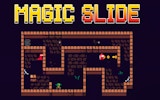
The maze uses bright pastel walls and soft lighting, with barriers clearly distinct from permanent walls. Gems glow gently to draw attention without feeling intrusive. Animations are smooth but understated, and the interface relies on large, clearly labeled buttons. Nothing in the presentation suggests threat or intensity, which keeps the focus on light competition rather than action. The overall look supports a game that families can share without worrying about dark or aggressive imagery.Controls and Short Matches
Controls are limited to two main actions: movement and barrier interaction. That simplicity means players of almost any age can start without a lengthy tutorial, and the game requires no reading or complex instructions, so even pre-literate children can join with minimal guidance. Matches are designed to finish in under five minutes, making the game easy to fit into short breaks or family gatherings. The pick-up-and-play structure is central to how the game works as a casual social activity.Multiplayer and Social Play
Although solo play against AI opponents is supported, the multiplayer mode is the main draw. When played with friends or family, the game encourages communication and lighthearted banter. Hiders can coordinate barrier placements to create confusing layouts, while seekers learn to read each other's strategies. The non-violent competition means young children can play without feeling overwhelmed, and parents often find that the game prompts conversations about strategy and observation, turning a short match into a relaxed critical-thinking exercise.Compatibility
• OS: Windows 10+, macOS 11+, iOS 14+, Android 10+
• Browsers: Chrome 100+, Safari 15+, Edge 100+, Firefox 100+
• Not compatible with Internet Explorer
Tested on real devices ✅ works as expected
Faq
How many players can join a match in Corridor Hideout Challenge?
The input does not specify a player limit. The game supports solo play against AI opponents and multiplayer with friends or family. For exact player counts, check the game's store page or official documentation, as the available description does not confirm a maximum.
Is Corridor Hideout Challenge suitable for young children?
Yes, the game is designed with younger players in mind. It uses bright pastel colors, soft lighting, and no dark or threatening elements. Controls are limited to movement and barrier interaction, and no reading is required, so pre-literate children can participate with minimal guidance.
What do gems do in Corridor Hideout Challenge?
Gems are scattered throughout the maze and provide bonus points. They glow gently to draw attention. Collecting them adds to the points earned from successful hiding or tagging, giving players an optional objective beyond simply avoiding or finding opponents.
How long does a typical round last?
Each match is designed to be completed in under five minutes. That short length makes the game suitable for quick breaks, family gatherings, or casual get-togethers. Rounds end either when the seeker tags all hiders or when the timer expires.
Can players move barriers after the round starts?
Yes. Hiders can reposition colored barriers on the fly. This allows them to create temporary alcoves, redirect the seeker's path, or break line of sight. The ability to move barriers during play is a core part of the hiding strategy and keeps rounds unpredictable.
Does Corridor Hideout Challenge require reading or a tutorial?
No. The game uses only two primary actions: movement and barrier interaction. The interface has large, clearly labeled buttons, and no reading or complex instructions are needed. Even pre-literate children can play with minimal guidance, which supports the pick-up-and-play design.







Editorial Notes