Spatial Tangram Builder
Reviews
Spatial Tangram Builder takes a familiar puzzle concept and adds a meaningful constraint: depth. Rotating seven tiles in three dimensions is harder than it sounds, and the progression from recognizable objects to abstract silhouettes gives players a clear sense of growth. The minimal interface and lack of a timer make it easy to pick up, though players seeking fast-paced or competitive challenges will find it too slow. The main limitation is that the source material does not specify puzzle count or platform availability, so those details remain open.
Description
From Flat Tiles to Three Dimensions
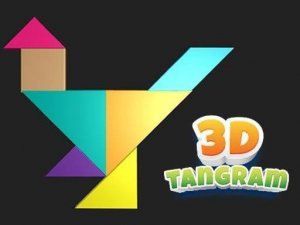
Spatial Tangram Builder keeps the seven-piece tangram set but removes the flat tabletop. Each puzzle presents a transparent silhouette, and your job is to fill it by rotating and positioning those seven tiles in 3D space. The twist is that a piece can look correct from one angle and wrong from another, so you constantly check alignment from multiple viewpoints. That single change turns a familiar shape-matching exercise into a test of mental rotation.
How the Puzzles Escalate
The game ships with a set of patterns that grow more complex as you advance. Early stages use recognizable objects such as animals or tools, which gives you a mental anchor for where pieces might go. Later levels shift to abstract configurations, and those require planning several placements ahead rather than trial and error. Completing a puzzle unlocks the next one, so difficulty rises steadily without a sudden spike.
Controls, Feedback, and Pace
Interaction is direct: tap or click a piece, drag it toward the target area, and rotate it with simple gestures or mouse movement. The controls respond quickly, which matters when you are nudging a tile a few degrees to seat it correctly. Subtle sound effects confirm successful placements, and the interface stays out of the way with a calming background. Because there is no timer, you can leave a piece mid-rotation and come back to it without penalty.
Who Gets the Most From It
Regular play exercises spatial awareness and logical thinking, particularly the ability to imagine how a shape looks after rotation. The absence of time pressure makes it approachable for casual players and families, while the later abstract puzzles give puzzle enthusiasts something to chew on. Sessions can be short or long, depending on how many silhouettes you want to clear.






Editorial Notes