Space Bird Flier: Retro Arcade
Reviews
Space Bird Flier: Retro Arcade keeps its scope tight: one button, one bird, and a corridor that never repeats. The randomized layouts give it more staying power than a fixed-stage arcade game, and collectibles add a risk-reward layer beyond simple survival. Players who enjoy reflex-based casual games with leaderboard goals will get the most from it. Those seeking story, multiplayer, or deep progression should look elsewhere.
Description
Flap, Dodge, and Survive the Space Corridor
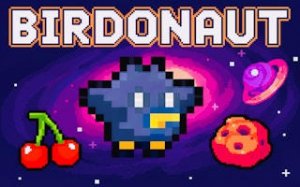
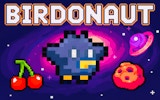
Space Bird Flier: Retro Arcade puts you in control of a bird astronaut navigating a constantly shifting space corridor. The objective is simple: fly as far as you can without hitting asteroids or floating planets. One-button flapping controls your altitude, and the corridor's layout changes with every attempt, so memorizing a single route won't help. Coins and fruits appear along the path, giving you a reason to take calculated risks rather than just survive.
How Flapping Shapes Every Decision
Each tap or key press makes the bird flap upward. Flap too often and you'll drift into obstacles above; flap too little and you'll sink toward the bottom of the corridor. That tension between overcorrecting and undercorrecting is the core skill the game asks you to develop. Because obstacle placement is randomly generated, you can't rely on muscle memory alone. Instead, you learn to read the spacing between asteroids and planets in real time, adjusting your rhythm to thread through gaps.
Coins, Fruits, and Personal Bests
Collectibles aren't just decoration. Coins and fruits boost your score, and chasing them often means flying closer to hazards than you otherwise would. The game supports short sessions as well as longer runs, so you can play for a few minutes or push for a personal best. Achievements and leaderboards give dedicated players something to work toward beyond the immediate score.
Retro Style and Pick-Up-and-Play Controls
The pixel art aesthetic and one-button input recall classic arcade machines. On desktop, a key press flaps the bird; on mobile, tapping the screen does the same. That simplicity makes the game accessible to players of any age or experience level, while the randomized obstacle layouts keep each run distinct. The result is a casual game that rewards patience and timing more than complex inputs.


Editorial Notes