Circuit Link Puzzle
Reviews
Circuit Link Puzzle keeps its scope tight: rotate wire segments until power reaches the bulb. The gradual difficulty curve and reversible moves make it forgiving for newcomers, while larger grids with more connectors reward planning and backward reasoning. Optional hints soften frustrating layouts. The lack of a timer supports a relaxed pace. Its main limitation is variety, since the core loop stays the same throughout. Best suited to players who enjoy spatial logic puzzles in short browser sessions.
Description
How the Circuit Works
Each puzzle places a power source and a light bulb somewhere on a grid, with wire segments scattered between them. Clicking or tapping a segment rotates it. The goal is to orient every piece so the current can travel from source to bulb without a break. A single misaligned connector stops the whole circuit, so the puzzle is less about speed and more about reading the layout before you start turning pieces.
Reading the Grid Before You Rotate
Early layouts use few wires and obvious routes, which makes them useful for learning how rotation affects a segment's open ends. Later puzzles add more connectors and obstacles, so the path becomes less direct. Working backward from the bulb often reveals which segments must point a certain way, and that constraint narrows the choices for everything upstream. Because every piece can be rotated freely, mistakes are reversible, but careless turning can undo a section you already solved.
Hints, Controls, and Session Length
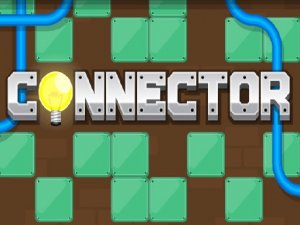
The game may offer optional hints on tricky levels, though the design rewards solving independently. Controls are straightforward: one click or tap per rotation, responsive on desktop and mobile browsers. Nothing needs to be installed, so sessions can be as short as a single puzzle or as long as a full run. Bright, clear visuals keep the wiring readable, which matters when several segments share the same grid space.
Who This Suits
Circuit Link Puzzle fits players who enjoy logic puzzles with a visible cause and effect: rotate a piece, see the path change. The gradual difficulty curve keeps it approachable for newcomers while still giving experienced solvers layouts that require planning. There is no timer pressure described, so the pace is set by the player.







Editorial Notes