Bubble Pop Puzzle Challenge
Reviews
Bubble Pop Puzzle Challenge keeps its rules minimal: select adjacent same-colored bubbles, clear the board, and score more by removing larger groups. The three difficulty modes scale the complexity of layouts rather than adding new mechanics, which keeps the game easy to learn but still gives experienced players harder patterns to solve. The absence of timers supports a relaxed pace and makes the game accessible to children and adults. The main limitation is that the core loop does not change across modes, so players seeking constant novelty may find it repetitive over long sessions.
Description
Core Matching Mechanic
Every move in Bubble Pop Puzzle Challenge starts with a simple observation: find two or more adjacent bubbles of the same color. Tap or click that cluster, and it disappears. Points are awarded based on how many bubbles were in the group, so a five-bubble cluster is worth more than a pair. The board shifts after each removal, which can open new groupings or leave isolated bubbles behind. That shifting layout is what turns a basic matching task into a planning exercise.
Difficulty Modes and Layout Variety
Three difficulty settings change how the bubbles are arranged. Easy mode keeps patterns straightforward, making it suitable for younger players or anyone wanting a low-pressure session. Medium sits between casual and challenging. Hard mode introduces more complex arrangements that demand forward thinking, since a careless early pick can strand bubbles that no longer have a matching neighbor. Each level brings a fresh layout, so the puzzle does not rely on memorizing a single board.
No Timers, No Pressure
Nothing in the game forces a decision. There are no countdown clocks, no move limits mentioned, and no penalty for pausing to study the board. That design choice matters for two reasons. First, it lets players think through sequences before committing, which is especially useful in hard mode. Second, it makes the game approachable for children or anyone who prefers puzzle solving without reflex-based pressure. A session can last a few minutes or much longer depending on how many levels a player chooses to work through.
Visual Style and Audience
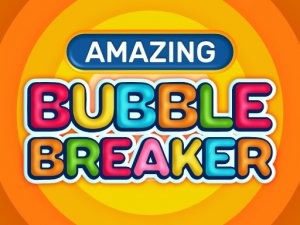
The bright, colorful bubbles and clean board layout give the game a cheerful look that fits its family-friendly content. There is no violent or inappropriate material, so parents can feel comfortable letting younger players try it. The combination of simple rules and scalable difficulty means the same game can serve as a casual time-filler or a more deliberate pattern-recognition challenge.




Editorial Notes