Puzzle Marksman Challenge
Reviews
Puzzle Marksman Challenge stands out in the hypercasual space by asking players to think before acting. Its physics-based levels reward observation and experimentation, while the clean presentation keeps focus on the puzzles. The gradual difficulty curve makes it accessible to newcomers, though experienced puzzle players may find early missions simple. Best suited for those who enjoy planning over fast reaction.
Description
Core Aiming and Physics Mechanics
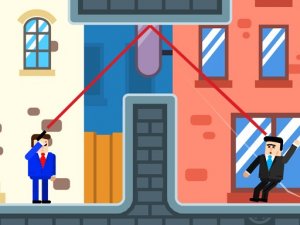
Puzzle Marksman Challenge mixes aiming with environmental problem-solving. Instead of simply shooting targets, you must read each level, identify objects that can be moved or triggered, and plan a sequence of actions. Physics determines how those objects behave, so a shot that looks correct at first may fail if the timing or angle is off. The game rewards patience: observing the full layout before acting often reveals the intended solution.
Mission Structure and Progression
Every level sets a specific objective, such as eliminating all targets or reaching a checkpoint. Resources are often limited, which means wasted actions can force a restart. The difficulty curve is gentle, introducing new environmental interactions gradually so that players learn the underlying rules without frustration. As missions accumulate, the game builds a steady sense of progression, with each cleared scenario unlocking the next set of challenges.
Visual Style and Accessibility
The design stays clean and uncluttered, keeping attention on the puzzle layout rather than distracting effects. This visual clarity supports the family-friendly tone and makes the game approachable for all ages. Because the mechanics rely on observation and timing rather than reflexes alone, players who prefer thoughtful pacing can enjoy it alongside those who simply want a quick casual session.
Approaches to Solving Levels
Many scenarios allow more than one route to success. Moving an object into a different position, triggering it earlier or later, or combining two interactions can all produce the same goal. Experimentation is part of the design, and the game does not punish creative thinking. When stuck, stepping back to study how objects relate to one another is usually more effective than repeating the same failed action.






Editorial Notes