Rolling Path Casual Arcade
Reviews
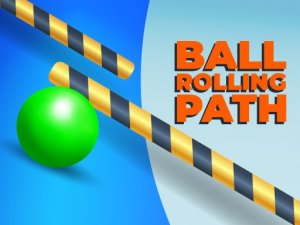
Rolling Path Casual Arcade reduces the endless runner formula to a single input: tap to flip the ball's direction along a diagonal track. That constraint works in its favor for short sessions, since there is nothing to learn before playing and nothing to manage during a run. Obstacles arrive at varying speeds and the pace climbs as you survive, so the difficulty curve stays honest. The trade-off is limited variety; players seeking progression systems or unlocks will find little here. Best suited to those who enjoy pure reflex score-chasing.
Description
One-Tap Direction Switching
The entire control scheme fits in a single action: tap the screen. Each tap sends the ball to the opposite side of the diagonal track. There is no jump button, no swipe gesture, and no menu to navigate mid-run. That constraint is the point. Because the only variable you control is which side the ball occupies, every obstacle becomes a timing question rather than a positioning puzzle. You are not steering so much as committing, and a mistimed tap cannot be undone.
Obstacle Pacing and Difficulty Curve
Obstacles arrive at different speeds, and that variation is what keeps runs from feeling identical. Early on, the gaps between obstacles give you room to think. As a session continues, the pace climbs and more obstacles appear, compressing your decision window. The game ends the moment the ball contacts an obstacle, so there is no health bar or second chance. Each run is a single continuous attempt, which makes the difficulty curve feel honest: you survive exactly as long as your reactions hold up.
Visuals, Performance, and Session Length
The presentation leans on vibrant visuals and smooth animation rather than detailed art, which suits a game built around split-second reads. There are no levels to load, so a run begins the instant you tap. That design makes Rolling Path Casual Arcade easy to pick up for a short break and easy to set down when a run ends. The game is lightweight and loads quickly on most devices, and core gameplay does not require in-app purchases.
Who This Suits
Players who enjoy reflex-driven arcade games with a single mechanic will find the appeal obvious. The absence of tutorials, complex controls, or menus means anyone can start immediately. Players who prefer progression systems, unlocks, or narrative will find little here beyond a rising difficulty curve. The game is best understood as a score-chasing exercise: the reward is a longer run, and the skill is a steadier rhythm.







Editorial Notes