Stickman Puzzle Challenge
Reviews
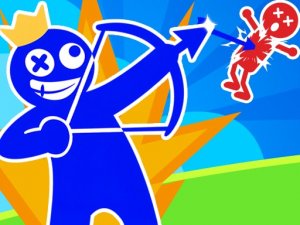
Stickman Puzzle Challenge focuses on the satisfaction of a well-timed shot. Enemies move in patterns, obstacles block clear lines, and the blue stickman can reposition to find better angles. The difficulty grows through added complexity rather than faster action, which makes it a good fit for players who enjoy thoughtful, low-pressure puzzles. The family-friendly presentation and straightforward controls lower the barrier to entry, though players seeking intense action may find the pace too slow.
Description
Core Puzzle Mechanics
Each level presents a blue stickman armed with a bow and a set of red enemies standing between you and the exit. The challenge is not speed but precision: you must read the position of every enemy and obstacle, then release your shot at the right moment. Arrows travel along a visible trajectory, so a mistimed release or a poorly judged angle sends the shot off course. The game mixes archery with light spatial reasoning, turning each screen into a small logic problem.
Enemy Movement and Timing
Red enemies do not stay still. They follow set patterns, and understanding those patterns is the difference between a wasted arrow and a clean hit. You watch a patrol route, wait for a gap, and shoot when the target is clear of cover. Some levels place obstacles that block direct lines of fire, forcing you to aim around them or wait for the enemy to step into an open lane. This rhythm of observe, wait, and release gives the game its puzzle identity.
Controls and Player Movement
Aiming and shooting use mouse or touch input, and the blue stickman can also move to dodge incoming attacks. That movement option adds a second layer to each encounter: you are not a static turret, but a character who can reposition to create better angles or avoid damage. The controls stay simple throughout, so new players can start immediately without a tutorial. Responsiveness matters here, because a late input can ruin an otherwise correct plan.
Progression and Difficulty
New obstacle types and enemy arrangements appear as you advance, so the game avoids repeating the same puzzle with different numbers. Early levels teach the basics of aiming and timing; later ones combine multiple moving targets, cover, and tighter windows for release. The difficulty curve is built on complexity rather than speed, which keeps the experience calm and thoughtful. Each failed attempt provides information you can use on the next try, making trial and error a genuine learning tool rather than a punishment.






Editorial Notes