Rodha Arcade Platformer
Reviews
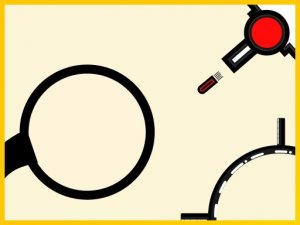
Rodha Arcade Platformer delivers a clean, skill-based challenge built around a ball character navigating hazards like cannons and moving saws. Its minimalist presentation removes distractions, letting the timing and precision of each jump and roll carry the experience. The gradual difficulty curve and replayable levels suit players who enjoy mastering routes. The main limitation is that character variety appears cosmetic rather than mechanical, so depth comes from level design and personal improvement rather than customization.
Description
Precision Platforming with a Ball Character
Rodha Arcade Platformer places you in a minimalist world where you control a spherical character. The game centers on timing and precision rather than combat or violence. Each level presents a straightforward goal: navigate from start to finish while avoiding hazards. Cannons fire projectiles, moving saws patrol set paths, and other contraptions demand careful observation. Because the ball has momentum, every jump and roll carries weight. You cannot simply rush forward; you must read each obstacle's rhythm and commit to a route. The clean visual design removes distractions, so your attention stays on the movement itself.
Reading Hazards and Planning Routes
Success depends on understanding how each hazard behaves. Moving saws follow predictable patterns, and cannon fire occurs at regular intervals. Your job is to identify safe windows and chain together jumps, dodges, and rolls without hesitation. Levels grow more complex as you progress, layering multiple hazards that require coordinated timing. A single mistimed input can send your ball into danger, so planning before acting matters more than raw reaction speed. The game encourages you to replay stages, not because you failed, but because a cleaner route or faster time is always possible. That replay loop turns each level into a small puzzle of movement.
Character Selection and Playstyle Variety
Rodha Arcade Platformer includes a selection of unique characters, each with a distinct look. While the core controls remain consistent, choosing a different character changes the visual feel of your run. This is a cosmetic layer rather than a mechanical one, but it gives players a reason to revisit levels with a fresh perspective. The family-friendly presentation means no mature themes or graphic content. The challenge comes entirely from skill and timing, making it suitable for players of all ages who enjoy focused, skill-based challenges.





Editorial Notes