Dice Merge Puzzle
Reviews
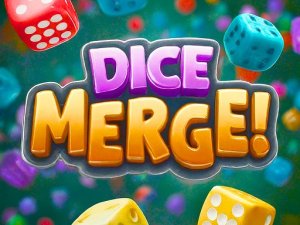
Dice Merge Puzzle delivers a clean puzzle loop: merge matching dice, clear nearby boxes, and plan chain reactions. Early levels are pressure-free, letting you learn how merges reshape the board. Later stages add multi-hit boxes and blocking obstacles, which raise the challenge through layout complexity rather than time pressure alone. The game suits players who enjoy logic and pattern recognition in short or long sessions. Its main limitation is a lack of variety beyond the core merge mechanic, but that same focus keeps it easy to pick up.
Description
The Merge Mechanic and Board Clearing
Dice Merge Puzzle centers on a simple action with layered consequences: tap one die, then tap another showing the same number. The pair merges into a single die with a value one higher—two 2s become a 3. That merge also clears any boxes in the immediate area. The board starts filled with dice and boxes, and your job is to remove all boxes within a limited number of merges or a set time. Because each merge changes both the dice layout and the surrounding boxes, every tap reshapes what moves are available next.
Why Chain Reactions Matter
Single merges are useful, but the real progress comes from setting up chain reactions. When one merge clears boxes, it can open space or expose dice that were previously blocked, making the next merge possible. Planning two or three moves ahead lets you clear larger sections at once instead of picking off boxes one by one. The game rewards players who look at the whole board rather than the nearest matching pair.
Level Layouts and Rising Difficulty
Each level presents a unique arrangement of dice and boxes. Early levels have no time pressure, which gives you room to study how merges affect the board. As you advance, new obstacles appear—boxes that need multiple hits to break, and barriers that block access to dice. These additions change your priorities: sometimes you must merge away from the boxes you want to clear just to reach a blocked area. Difficulty grows gradually, so the challenge comes from new board conditions rather than sudden spikes.
Feedback and Session Length
Every merge gives clear visual and audio feedback, so you always know what changed and why. The game is intuitive enough to start without a tutorial, and its focused design suits short sessions or longer play. There is no story or complex meta-system—just the board, your merges, and the goal of clearing boxes. That simplicity keeps attention on pattern recognition and move planning.






Editorial Notes