LaneShift 3D Driving Puzzle
Reviews
LaneShift 3D Driving Puzzle succeeds as a clean, accessible reflex game. The one-input control scheme keeps it approachable for all ages, while the rising traffic density provides a genuine challenge. Its family-friendly design and lack of time limits make it easy to pick up for short breaks. The main limitation is variety: the core loop never changes, so players seeking new mechanics or modes may lose interest. Best for those who enjoy high-score chasing and simple, precise controls.
Description
Core Lane-Switching Mechanic
Your car moves forward automatically. The only control is lateral: tap or swipe left to shift one lane left, tap or swipe right to shift one lane right. Each successful lane change that avoids a collision earns points. The challenge comes from reading traffic flow and committing to a lane before the gap closes. There are no brakes or acceleration inputs, so every decision is about positioning and timing.
Traffic Density and Difficulty Curve
Early traffic is sparse and slow. As you drive farther, more cars appear and they move at varying speeds, forcing you to track multiple vehicles at once. The game does not introduce new controls; instead, it increases the rate and complexity of lane-change decisions. Bonus items appear occasionally and are worth extra points when collected safely. Hitting any obstacle ends the run, and your score is compared to your previous best.
Visual Style and Family-Friendly Design
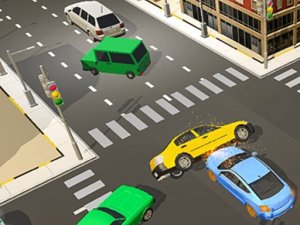
Vibrant 3D graphics and smooth animations present a clean, readable highway. The game deliberately avoids violent or disturbing content, focusing on skill and patience rather than speed or danger. There are no time limits, so you can play at your own pace. The interface is minimal: no tutorials, no complex menus, just the road and your car. This makes it accessible for all ages while still offering a genuine reflex challenge.
Approach to Scoring and Improvement
Because points come from safe lane changes and bonus pickups, high scores depend on consistency rather than risky moves. Anticipating traffic patterns and using quick, precise swipes helps you maintain a clean run. Patience matters more than rushing; the difficulty rises gradually, so short sessions can still produce improvement. Tracking your own high score each session is the main way to measure progress.








Editorial Notes