Mini Challenge Arcade Duel
Reviews
Mini Challenge Arcade Duel keeps its scope narrow and executes it consistently: short mini-challenges, simple controls, and a direct score comparison against either a second player or an AI opponent. The minimalist presentation and lack of complex rules make it easy to start, and the same-device multiplayer supports casual group play. Its limitation is depth; players seeking progression systems or extended campaigns will find the format intentionally brief.
Description
Head-to-Head Arcade Format
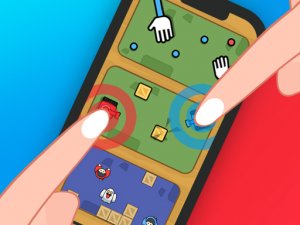
Mini Challenge Arcade Duel is a hypercasual arcade title centered on quick competitive rounds. Two players can share one device and compete directly, while a solo player can face an AI opponent. The goal in every round is simple: finish faster or more accurately than your rival to earn the higher score. Because rounds are short and rules are minimal, the game works as a pick-up-and-play contest rather than a long session commitment.
Controls, Tasks, and Scoring
Each mini-challenge has its own straightforward control scheme, usually keyboard keys or touch input. On-screen instructions appear at the start of a round and define the specific task. Success depends on reaction time and precision: completing the objective ahead of your opponent produces a better score. The variety of tasks keeps the competition from settling into a single rhythm, since each round tests a slightly different combination of speed and accuracy.
Multiplayer and AI Practice
The multiplayer mode supports two players on the same device, making it a natural fit for family, friends, or coworkers who want a lighthearted contest. AI mode serves as solo practice and as a way to sharpen skills before facing a human opponent. Both modes use the same short-round structure, so switching between them does not change how the game feels or how a round is won.
Visual Style and Accessibility
Minimalist graphics keep attention on the competition rather than on visual noise. The design supports immediate understanding: players can join without lengthy tutorials or complex rules. This accessibility suits mixed groups where experience levels differ, and it also makes the game easy to return to after a break. The emphasis stays on hand-eye coordination, reaction time, and the small decisions that decide a close round.






Editorial Notes