Railroad Crossing Management Arcade
Reviews
Railroad Crossing Management Arcade delivers exactly what its name suggests: a single-mechanic arcade challenge about managing a railroad crossing. The strength is its clarity—tap to lower or raise gates, watch for trains, and keep cars moving. Difficulty scales by adding more vehicles and tighter timing windows, which keeps the pressure rising without new controls. The colorful presentation and lively sound support the light tone. It is best for players who enjoy quick reflex puzzles and do not need story or depth. The main limitation is repetition; once the pattern is learned, the appeal depends on chasing higher scores.
Description
Balancing Two Traffic Streams
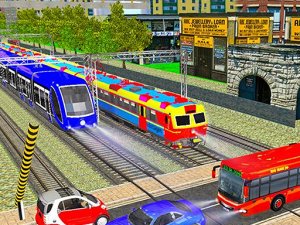
Railroad Crossing Management Arcade places you at a single intersection where cars and trains share the same space. Your job is to decide when the crossing gates go down and when they come back up. Lower the gates before a train arrives to stop cars; raise them after the train clears so waiting vehicles can continue. Every round asks you to read the approach of both traffic types at once. The challenge is not just reacting—it is anticipating. A car that reaches the tracks while a train is coming creates a collision, and collisions cost lives.
Tap Controls and Timing Windows
The entire control scheme is a single tap or click. That simplicity hides the real demand: timing. You need to open gates early enough to prevent a backlog of cars, but not so early that a vehicle slips onto the tracks before the next train. Pedestrian signals and traffic lights add extra cues you must monitor. As the game progresses, more trains and cars appear, shrinking the safe window for each decision. Success depends on consistent, quick reactions rather than complex inputs.
Progression Through Traffic Density
Early rounds use simple patterns with generous gaps between vehicles. New traffic flows and obstacles are introduced gradually, so the difficulty climbs without sudden spikes. Later stages combine multiple trains and dense car queues, forcing you to prioritize one side of the intersection while accepting a short delay on the other. Each successful crossing adds points; mistakes reduce your remaining lives. That scoring loop rewards clean runs and punishes rushed gate changes.
Who This Suits
Because there is no complex setup and no prior knowledge required, the game fits short breaks as well as longer sessions. The colorful visuals and sound effects keep the mood light even when traffic gets heavy. Players who enjoy timing-based arcade challenges or simple management tasks will find the loop easy to start but hard to perfect. Those seeking deep strategy or story should look elsewhere—this is a focused reflex and decision game.








Editorial Notes