2048 Merge Puzzle Challenge
Casual Puzzle Merge Strategy Logic Roguelike
2048 Merge Puzzle Challenge
148
Developer: Amethyst Shift Studio
Published: 1766160000
Updated: 2026-10-01

Reviews

2048 Merge Puzzle Challenge sticks to the proven slide-and-merge loop but gives it structure through Story Mode targets and an open-ended Endless Mode. The roguelike elements are the main differentiator, making sessions less predictable than a fixed puzzle board. Players who enjoy spatial planning and low-pressure repetition will get the most from it. The main limitation is that the input does not detail progression depth or theme variety, so expectations should stay grounded in the core merge mechanic.

Description

Merging on a 4x4 Grid

Every move in 2048 Merge Puzzle Challenge starts with a swipe or arrow key press. All tiles on the 4x4 board slide in that direction, and matching pairs combine into a higher-tier object. The challenge is spatial: each swipe changes the board, and a careless move can leave you without a clean path to your next merge. The core loop is simple to learn but demands forward planning to avoid a gridlock.

Story Mode and Endless Mode

The game splits into two distinct ways to play. Story Mode gives each level a target character or object that you must create within a limited number of moves. That move limit turns every swipe into a resource, so you weigh short-term merges against the longer route to the target. Endless Mode removes the move cap and asks how long you can keep merging before the board fills up. It doubles as a low-pressure space to learn tile patterns and test habits that carry back into Story Mode.

Roguelike Variety and Visual Themes

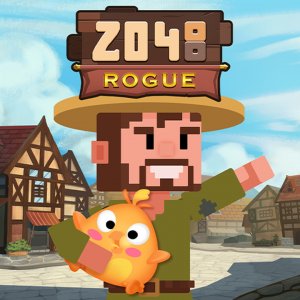
Roguelike elements shift the conditions from one session to the next, so a strategy that worked before may need adjusting. The input also notes visual themes such as Medieval Village or Modern City, which change the look of the tiles and board without altering the underlying merge rules. Because the board state and session conditions vary, repeated play stays less predictable than a fixed puzzle layout.

Simple Controls, Deliberate Play

Arrow keys and swipe gestures cover every action, which keeps the barrier to entry low. The difficulty comes from decision-making rather than input complexity. Corner-focused merging is a practical habit: it keeps higher-tier tiles in a stable position and reduces the number of directions that can break your setup. In Story Mode, tracking the target tile and your remaining moves matters more than chasing every possible merge. Endless Mode rewards the opposite mindset, encouraging you to build patterns and delay gridlock for as long as possible.


Editorial Notes

Compatibility

• OS: Windows 10+, macOS 11+, iOS 14+, Android 10+
• Browsers: Chrome 100+, Safari 15+, Edge 100+, Firefox 100+
• Not compatible with Internet Explorer
Tested on real devices ✅ works as expected

Faq

What is the main goal in 2048 Merge Puzzle Challenge?
The core objective is to keep the 4x4 grid from filling up while merging identical tiles into higher-tier items. In Story Mode, you also need to reach a specific target character or object within a set number of moves. Endless Mode drops the move limit and focuses on surviving as long as possible.
How do the roguelike elements change each session?
The input describes roguelike unpredictability as a defining feature, meaning the conditions of a run can differ from one session to the next. That variety pushes you to adapt rather than repeat a single memorized sequence. It also means two attempts at the same mode may not play out identically, which supports the game's replay value.
Do I need to play Story Mode before Endless Mode?
No fixed order is stated. Story Mode gives you concrete targets and a move limit, which can sharpen your planning. Endless Mode removes those constraints, so it works well for practicing merge patterns or playing without a level goal. You can choose either mode from the start based on what you want from a session.
What controls does 2048 Merge Puzzle Challenge use?
The game supports arrow keys and swipe gestures. Pressing an arrow key or swiping moves every tile on the grid in that direction, and identical tiles that meet merge into a higher-level piece. The control scheme is intentionally simple, so the challenge comes from deciding which direction to slide rather than from complex inputs.
Is there a way to avoid filling up the grid too quickly?
Keeping your highest-value tiles in one corner is a common approach, because it limits how many directions can disrupt your layout. Random swipes tend to scatter tiles and create gridlock. Planning several moves ahead and merging in a consistent direction helps you maintain open space and reach target tiles more efficiently in Story Mode.
What visual styles appear in the game?
The input mentions themes such as Medieval Village or Modern City. These change the presentation of the tiles and board, but the merge rules stay the same. The themes are described as a way to keep the experience engaging across sessions, not as a gameplay-altering feature. Specific theme availability is not detailed in the provided information.