2048 Merge Puzzle Challenge
Reviews
2048 Merge Puzzle Challenge sticks to the proven slide-and-merge loop but gives it structure through Story Mode targets and an open-ended Endless Mode. The roguelike elements are the main differentiator, making sessions less predictable than a fixed puzzle board. Players who enjoy spatial planning and low-pressure repetition will get the most from it. The main limitation is that the input does not detail progression depth or theme variety, so expectations should stay grounded in the core merge mechanic.
Description
Merging on a 4x4 Grid
Every move in 2048 Merge Puzzle Challenge starts with a swipe or arrow key press. All tiles on the 4x4 board slide in that direction, and matching pairs combine into a higher-tier object. The challenge is spatial: each swipe changes the board, and a careless move can leave you without a clean path to your next merge. The core loop is simple to learn but demands forward planning to avoid a gridlock.
Story Mode and Endless Mode
The game splits into two distinct ways to play. Story Mode gives each level a target character or object that you must create within a limited number of moves. That move limit turns every swipe into a resource, so you weigh short-term merges against the longer route to the target. Endless Mode removes the move cap and asks how long you can keep merging before the board fills up. It doubles as a low-pressure space to learn tile patterns and test habits that carry back into Story Mode.
Roguelike Variety and Visual Themes
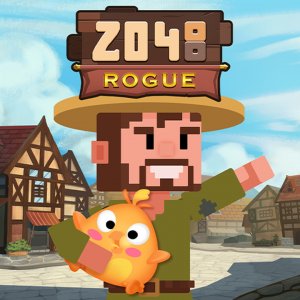
Roguelike elements shift the conditions from one session to the next, so a strategy that worked before may need adjusting. The input also notes visual themes such as Medieval Village or Modern City, which change the look of the tiles and board without altering the underlying merge rules. Because the board state and session conditions vary, repeated play stays less predictable than a fixed puzzle layout.
Simple Controls, Deliberate Play
Arrow keys and swipe gestures cover every action, which keeps the barrier to entry low. The difficulty comes from decision-making rather than input complexity. Corner-focused merging is a practical habit: it keeps higher-tier tiles in a stable position and reduces the number of directions that can break your setup. In Story Mode, tracking the target tile and your remaining moves matters more than chasing every possible merge. Endless Mode rewards the opposite mindset, encouraging you to build patterns and delay gridlock for as long as possible.







Editorial Notes